Beavers, Beavers, Beavers: Dam Analogs
By Rich Lankford
National Office of Development
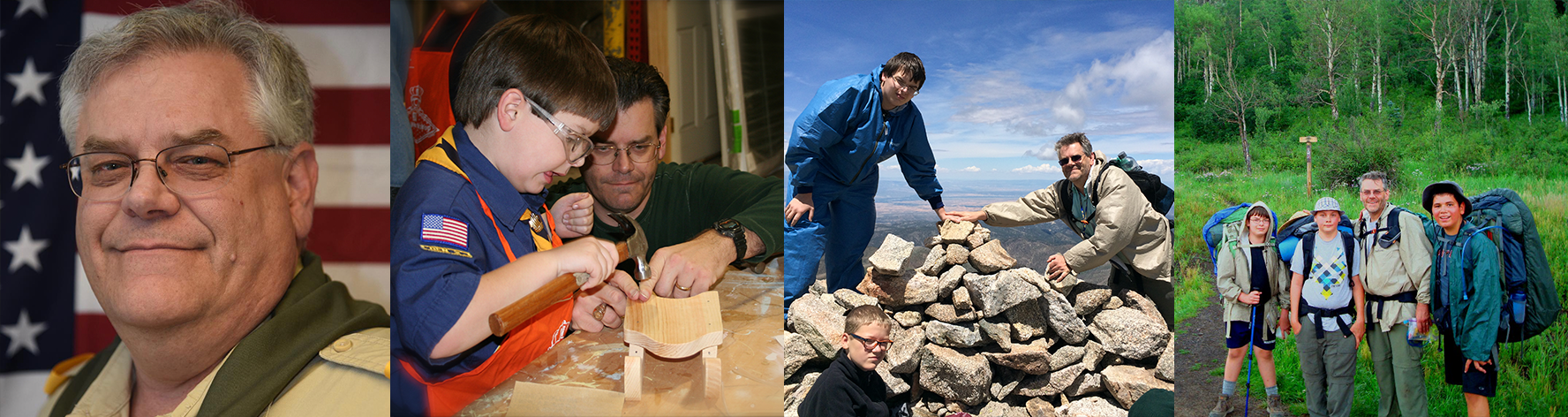
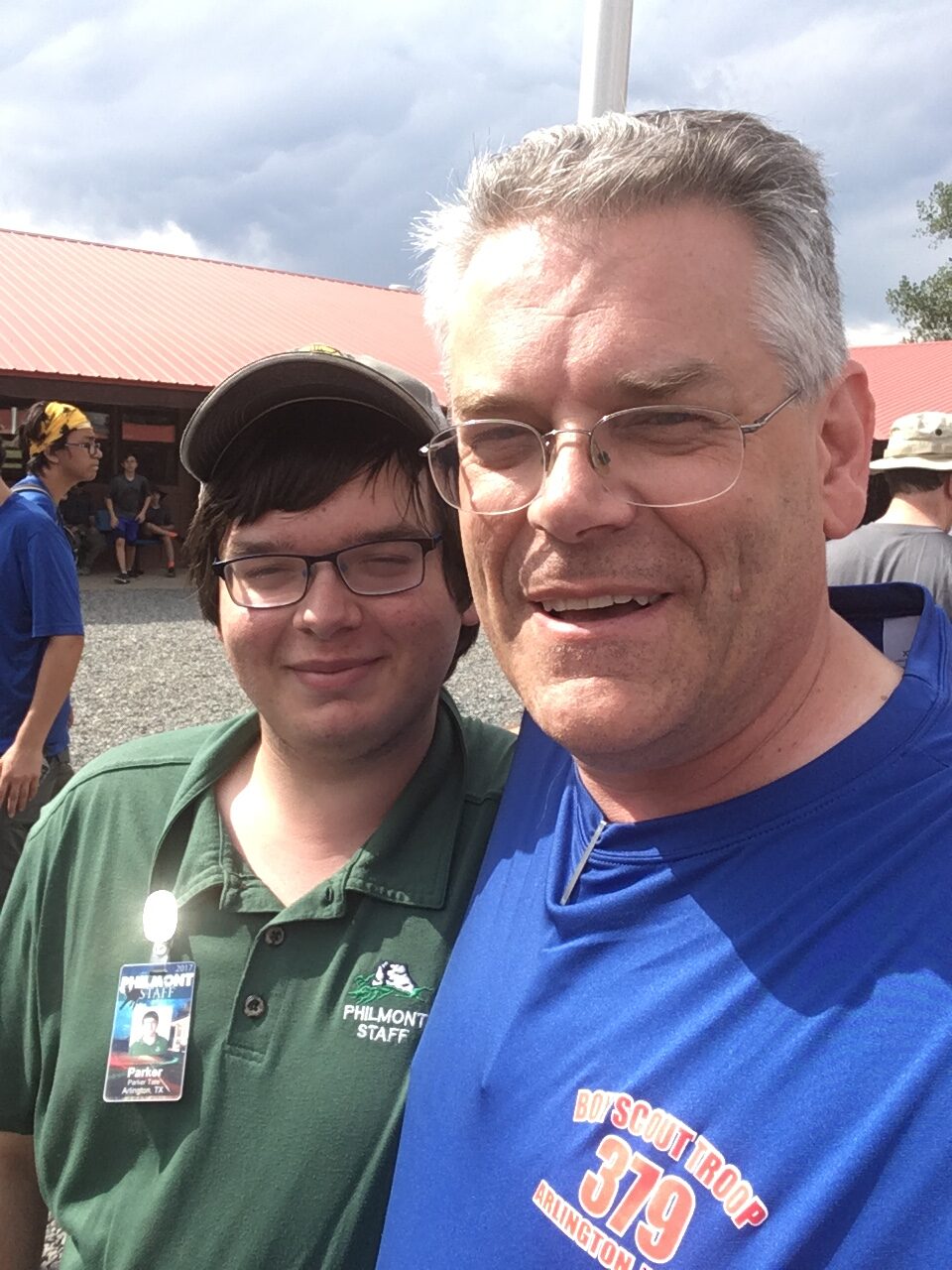
At summer camp, Roger Tate watched his son walk down the hill still dressed from a night in the woods.
His son had just completed the Wilderness Survival merit badge requirement, built his own shelter and slept in it overnight. For any Scout, that is a big moment. For Roger’s son, who is on the autism spectrum, it was a mountain climbed.
That same morning, Roger had climbed one of his own. He had just completed the Mile Swim.
As Roger came out of the water, tired and proud, he saw his son coming toward him. His son had finished his challenge, too and he was coming to congratulate his dad.
In that moment, Roger saw the heart of Scouting.
They had both done something difficult.
They had both pushed through fear and uncertainty. And they were there to support each other.
For Roger, that is what Scouting makes possible.
Years later, Scouting came back into his life through his family.
When his son entered first grade, Roger’s wife began looking for an activity that could help him grow.
Their son needed a place where he could build confidence, develop social skills, and experience adventure with patient, caring adults beside him.
She believed Scouting was exactly what he needed.
Roger was not sure at first. But during their first Tiger Cub meeting at a local fire station, something changed. After the Scouts toured the fire truck, they were invited to shoot the fire hose. Then the adults were invited, too.
That night, he realized Scouting could give young people experiences they might never find anywhere else. It was fun. It was meaningful. And it was a place where adults could help open doors for kids.
Around 2005, Roger stepped back into Scouting as an adult volunteer.What began as a way to support his son soon became something much bigger.
As Roger became more involved, he searched for resources to help Scout leaders better support youth with autism and other special needs. He found very little guidance written for the everyday unit leader, parent, or camp volunteer.
To Roger, that was not good enough.
So, he made it his mission to help fill that gap.
Through years of service, research, and volunteer leadership, Roger became involved with the National Special Needs and Disabilities Committee.
In 2018, work began in earnest on the Inclusion Toolbox, a living online resource created to help Scout leaders, parents, and volunteers support Scouts with disabilities and special needs.
Available at ablescouts.org, the Inclusion Toolbox includes more than 30 modules, with guidance on everything from training summer camp staff to understanding specific disabilities.
Roger helped gather information from medical, therapy, educational, and family resources, then translated it through the lens of Scouting.
His goal was simple: make the information useful.
No heavy jargon. No complicated language. No expectation that a volunteer leader has to become a medical expert.
Roger’s message is clear: look at the Scout in front of you. See what they need. Adapt. Encourage. Help them succeed.
He believes one of the greatest gifts a Scout leader can give a parent is trust. Families need to know that leaders are prepared, that they care, and that they have the Scout’s best interest at heart.
That trust can change everything.
Roger also believes Scouting offers something rare: the chance to try again.
In many activities, young people are expected to perform at a certain time, on a certain day, whether they are ready or not. But in Scouting, a Scout can practice, learn, come back, and try again.
To Roger, Scouting is not simply a safe place to fail.
It is a safe place to try, and ultimately succeed.
That belief has shaped his volunteer service and his work in inclusion. He knows that every Scout’s path looks different. Some Scouts need more time. Some need a different approach. Some need a leader who is willing to listen, adjust, and believe in them.
But every Scout deserves the opportunity to grow.
Today, Roger’s son is a 28-year-old adult, gainfully employed and living on his own. His daughter also found her own path through Venturing and later served on Philmont staff for three summers in the backcountry.
For Roger, Scouting did more than serve his children. It changed him, too.
It connected him more deeply to his community. It strengthened his faith. It gave him friendships, purpose, and a mission that continues to serve families across the country.
Roger Tate’s story is a reminder that one parent’s love can grow into a lifetime of service.
Because of volunteers like Roger, more Scouts are being seen, supported, and welcomed.
More families are finding hope.
And more young people are discovering that they, too, have a path to succeed.